
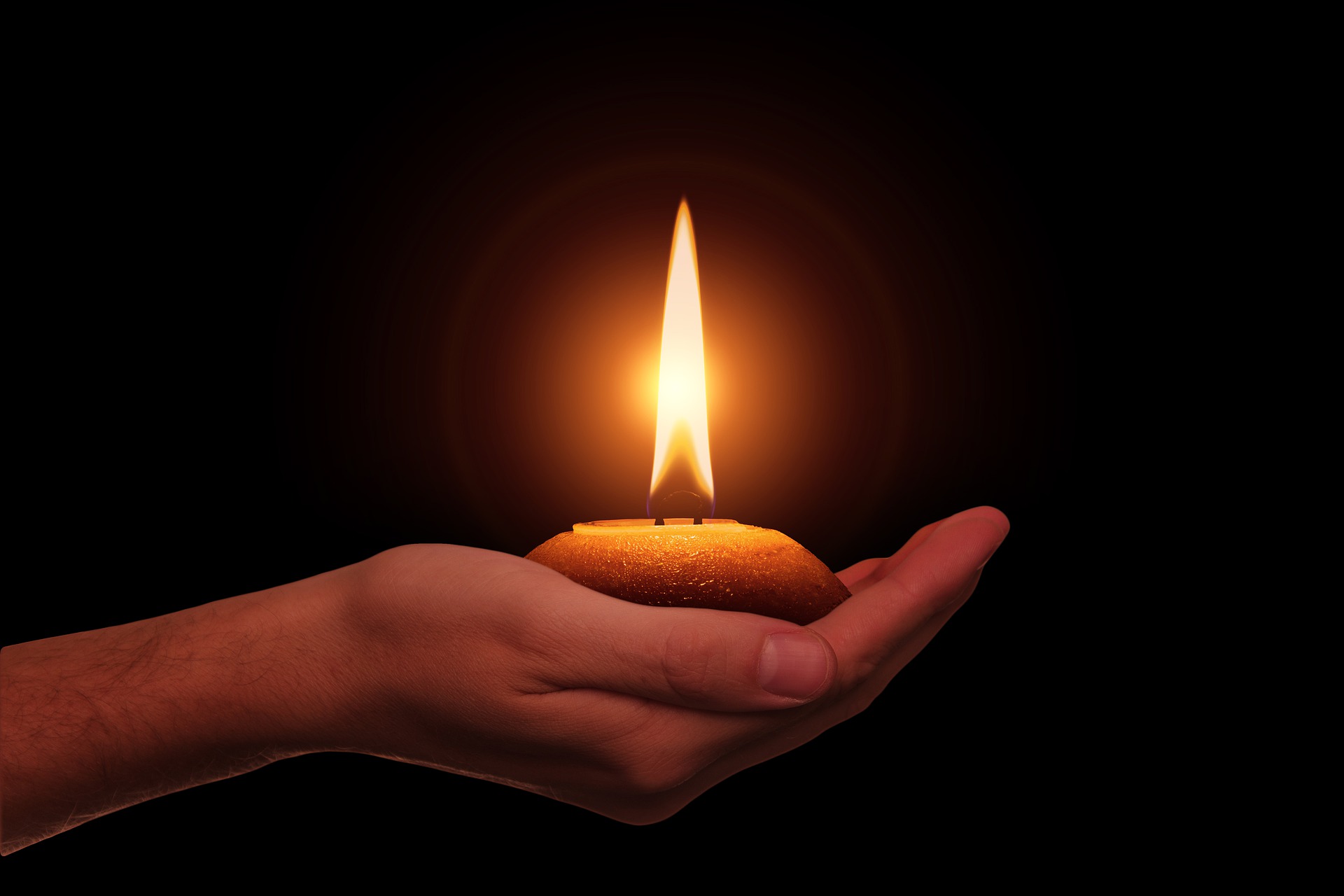
Like most festivals of India – Deepavali too has many stories behind it. Also known as the festival of lights, one of the key messages is: May the light dispel the darkness of ignorance from our lives.
Lessons that are timeless
One story I used to hear when growing up has lessons for humanity that are as relevant today as they were millennia ago. As you read the narrative, you will re-discover lessons in various forms. The basic human failings we need to watch out for: anger, lust, tit for tat / endless cycle of avenge and revenge, jealousy, greed, blinding love, ego, and more. In addition – you will come across the good side of humanity: friendship, fidelity, virtue, integrity, fairness, sacrifice, valor, and duty, among others. Enjoy the read. Make sure to pause at the end of each paragraph to think about these.
NOTE: The story below is compiled from information from various sources, scriptures, and my recollections. It is possible there might be some inaccuracies – please point those out to me so I can refine it over time. The whole story is a voluminous epic, as such several details and side stories were left out to keep it succinct.
Blinding love
There was a beloved and noble King known as Dashratha; his wives were Kausalya, Kaikei, and Sumitra. Each had a son except Sumitra, who had two: Ram, Bharat, Shatrughan, and Lakshman, respectively. Rama was the heir to the throne, however, Kaikei had other intentions – that Bharat – her son be the heir and Rama be sent to exile for 14 years. She was asking King Dashratha to live up to his promise (granting her two boons) he had made at one time when she had helped him win a war.
Much to his dismay and shock, Dashratha had to concede; he did not survive the trauma and passed away. Rama together with his wife Sita, and brother Lakshman proceeded to the forest to live in exile, leaving the kingdom behind.
Performing duty with respect
Bharat was away with his uncles, and upon his return, learned of what had happened. Despite much turmoil and gloom in the family and the kingdom, his mother wanted him to be the King. Virtuous Bharat could not accept this; he set out to search for Rama and persuade him to come back. When Rama didn’t accept his pleas Bharat asked him for his sandals saying he will rule the kingdom as a custodian. Upon his return to Ayodhya, he placed Rama’s sandals on the throne and ruled the kingdom in Rama’s name.
Forces of evil manifest
When Rama was in the forest during his days in exile, a woman by the name of Shrupnakha chanced upon him and was smitten by his good youthful looks. She also noticed Sita was incredibly beautiful. Shrupnakha attempted to entice Ram, however, he kindly turned down her advances saying he was faithful to his wife and would not accept anyone else. She then attempted to entice Lakshman, that did not work either. Enraged, she attacked Sita, but got punished by Lakshman who cut off her nose.
Shrupnakha was Ravana’s sister, who was the King of Sri Lanka, a state across the sea south of India. He was a devout follower of Shiva who had won powerful boons due to his penances. He was also a great scholar having mastered several scriptures and books of knowledge of the day. Despite all this and a lineage of sages he had powerful evil sides to him – among these were his pride fed by the boons he had won, and a propensity to have relations with many women. He heard the laments of her bemoaning sister, and also about Sita’s beauty. He decided he would abduct Sita from the forest.
To do that he would somehow have to separate Rama and Lakshman from Sita so he could approach her when she is alone. Ravana then asked his maternal uncle Maricha, who was adept in the art of sorcery, to help him in the matter, threatening him with his life. Maricha consented preferring to die at the hands of Rama rather than Ravana.
The two flew from Sri Lanka to the forest where Rama was living in exile and Maricha disguised himself as a sparkling golden deer. When Sita saw the deer – she got carried away and asked Rama to get him, dead or alive. Concerned about her safety, Rama asked Lakshman to stay behind while he went to capture the deer. After some pursuit, Rama shot the deer, who cried out Sita and Lakshmana’s names in Rama ’s voice. Sita lost her poise and asked Lakshman to go see what had happened to Rama . Now she was alone at the hut, and Ravana appeared disguised as a mendicant begging for alms. As Sita stepped forward he kidnapped her and took her to Sri Lanka. Jatayu a divine bird accosted Ravana as he was on his way, but Ravana cut off his wing and Jatayu fell to the ground.
Recovery starts
Meanwhile, Rama and Lakshman both realized they had been deceived and hurried back to the hut. Sita was nowhere to be found. They searched and searched to no avail. During the search they came upon injured Jatayu who tells them Ravana had abducted Sita and he had gone south. But still, finding Sita was no easy task – where could she be? Help arrived – Rama’s ardent devotee Hanuman, and Sugreev. Both were monkeys with divine powers. It was Hanuman who finally found her in Sri Lanka after flying across the ocean.
Despite pleas from well wishers, and family members, Ravana held Sita in captivity, repeatedly attempting to get her to accept him. She never did. Messengers who came to Ravana with proposals to return Sita to Rama peacefully were mistreated and attacked. War was the only avenue left and a fierce conflict followed lasting several days. In the end, Ravana was killed. Eventually the exile period ended and Rama returned to his kingdom with Lakshman and Sita.
Kausalya asked her son did you kill Ravana after all? Rama responded saying I did not kill Ravana, it was his “I” that did.
Thanks for reading, Happy Deepavali.
Rai Chowdhary
 Rai Chowdhary's blog