India marks 75 years of Independence from British rule

Happy Independence Day fellow Indians Everywhere

The march forward continues!

There was a time when India was “the” if not among the richest countries in the world. It’s GDP used to be ~25+% of world’s total GDP (pre-British rule). This declined to ~2% in 1947 – the year British rule ended, and India gained independence1.

Much progress has been made since then, and a lot remains to be done – as India rightfully regains its lost glory and establishes itself as a world leader in many spheres. I will discuss that in detail over time, but today I would like to share a few thoughts on how does one determine whether we are living with “independence” or living “in dependence” – the two are not the same.

Here are seven key pointers of many – that you need to consider – as you ponder the differences between the two. May be this will prompt you to add / create some of your own.

  1. Able to travel, settle down / live in a city / state of your choice at will
  2. Speak the truth freely without fear
  3. Rule of law works equally and fairly for everyone
  4. Opportunities for education are available to everyone on an fair basis
  5. Jobs and career opportunities do not follow discriminatory practices
  6. Selection of life partner is by your choice or you have the final word in the same without fear of repercussions
  7. Change jobs / careers at will without encumbrances

The nation’s progress depends much on the answers to the above (and similar freedoms), and great leaders strive to work hard for these. However, the citizenry has an equal if not a bigger role to play. To that end, introspection is needed with an open mind to look at one’s own shortcomings, and a will to address the same.

Jai Hind.

1 https://en.wikipedia.org/wiki/Economic_history_of_India

So you want to be an entrepreneur – what is your IQ?

Startled? You should be…

This has nothing to do with your Intelligence Quotient – rather – everything to do with the Investability Quotient.

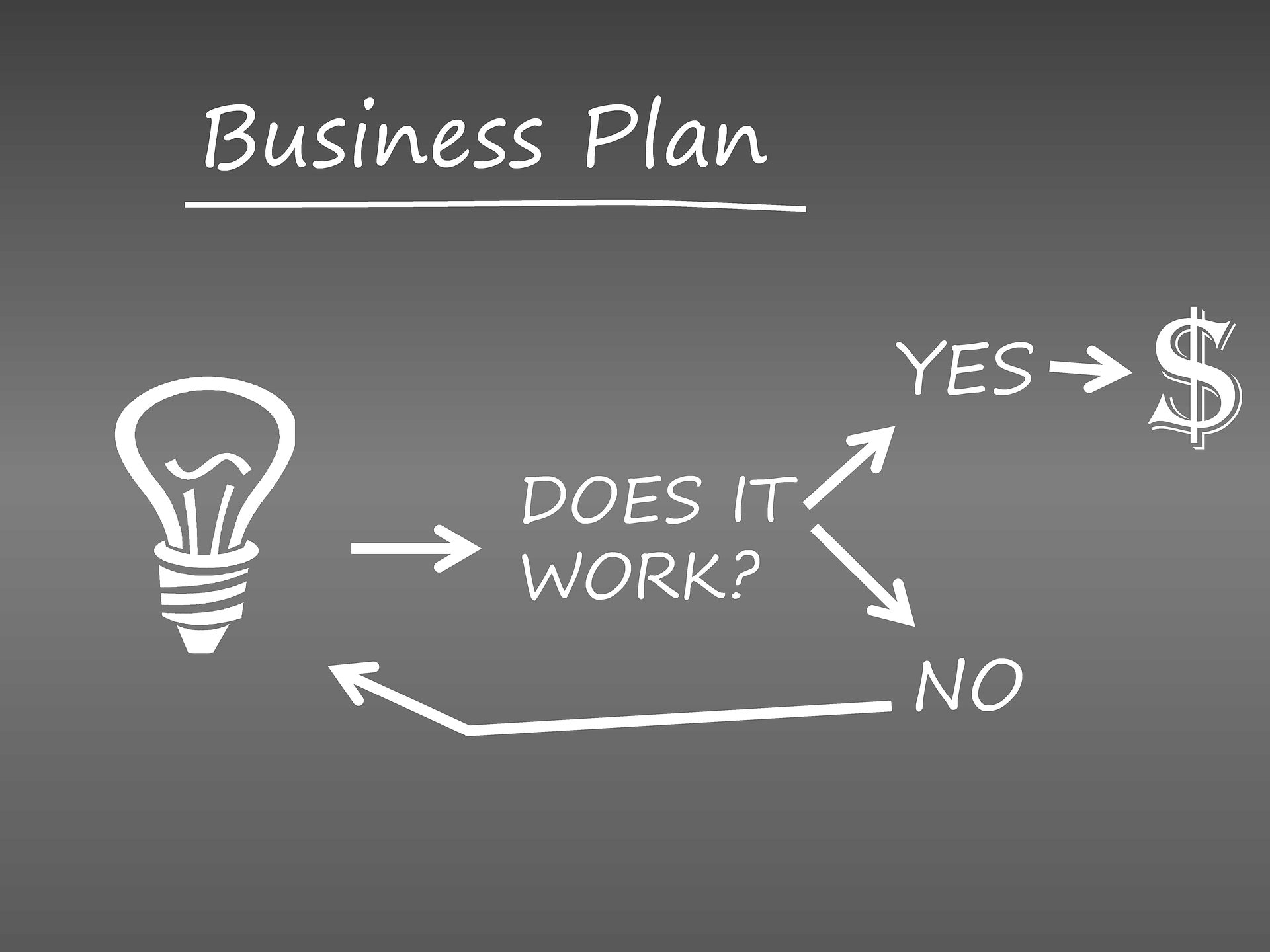
I work with / hear from wannabe entrepreneurs from across the world. Many believe if they have an idea and it worked, they have a business plan, and they are ready to go.

At one extreme, some want to become the next Warren Buffet in half the time, others aim to change the world by doing good. As an investor, I politely excuse myself from the conversation in a few seconds and ask them to first send me the homework they have done.

What is this Investability Quotient?

There is nothing wrong with having lofty goals, dreams, and seeking funding to accomplish these. However, the fact is, probabilities of successful outcomes matter. And that depends on the “Investability Quotient” of the entrepreneur and the project – as viewed by the investor.

It is an index that aggregates across multiple dimensions that impact a business. Comprised of standard measures based on the stage of the business and several that are customized to the specific industry, they provide a better perspective on the chances the business will escape infant mortality.

Is there absolute certainty of any kind – for a given IQ? Absolutely not, however, entrepreneurs and investors alike can better the odds, tilting them favorably.

Sample dimensions and components (three from a long list)

1: State of the economic cycle
Surprisingly, this is a much overlooked dimension although it can impact a business in many ways. During economic slowdowns, spending is curtailed, and many programs get shelved. If the product / service is viewed as discretionary, getting traction on sales will be harder. Further, the cash to cash cycle time is likely to stretch out. This has important implications on how much capital will be needed and the runway needed for the startup to take off. Thus knowledge of the interaction between the products / services offered and the business cycle is a key determining factor.

2: Leadership team
One key attribute of the leadership team is coachability – particularly the CEO. This alone can be a key differentiator between the startups that make it and others that don’t. A healthy dose of ego may be near and dear to leaders, and can be instrumental in building confidence. However, it needs to be balanced with an equal amount of humility. The savvy CEO knows how to cultivate and maintain such balance. The challenge is for the investors to figure out early enough on how teachable the leadership team really is.

3: Financials
The importance of cash (an essential component of this dimension) can never be over emphasized. The leadership absolutely must have rivetted attention to the Dry Well Time (DWT) and be able to answer the question “What is your DWT?” even while asleep. Not being able to do so is an indication they lack firm grasp of how much time is left before the business goes to RIP. This is true regardless of the nature of the business – for profit, or not for profit. Most startups rely on Balance Sheet and P&L statements which are of little use in this regard. Knowing the DWT metric and key inflexion points on the roadmap enables leadership to navigate around sub-surface rocks that can wreck the boat particularly when cash (water level) begins to drop.

You have seen just how business IQ is different from conventional IQ. As an entrepreneur you will need sharp focus on multiple dimensions and know the essentials in each. Further – a good understanding of how the dimensions and their components interact with each other is indispensable. This stuff is hard to learn through academic programs.

Still interested in entrepreneurship? Ready to take a leap? Need a sounding board, or coach? Let’s chat! Use the form below to contact me.

Five Leader Biases To Guard Against

Neither the leader nor anyone else is immune

Worshipping and following leaders without questioning is how many people in the world lead their lives. For them, independent thinking is hard work. Life is easier when the word of the leader (written or oral) is accepted as final.

Under this modus operandi, evidence notwithstanding, anything to the contrary is false and worthy of disbelief. Pursuing a contrarian path has varying consequences – from ridicule to even death.

What is the impact of bias? Which kinds of bias should we be watchful of? Wikipedia enlists 140! Exploring all is beyond the scope of this article; join me as we explore a few. As always – do share your thoughts and experiences.

1: Confirmation bias

The phenomena of confirmation bias has been around for ages, although the term was coined by the English psychologist Peter Watson in the 1960s. It manifests in the form of favoring or accepting as true information that which fits our pre-existing beliefs or biases.

Thus, for those who firmly believe (or have the conviction) that water can cause objects to break apart and swell, the above image will immediately become irrefutable evidence for the same. Such folks in turn can influence others who do not know the physics of refraction, nor have the wherewithal to verify the accuracy of the leader’s statements via an experiment.

This is the reason there are leaders and their believers who claim the earth is flat. Click here to see a video documenting the dialog between a commentator from Natgeo, members of the flat earth society, and others.

Such leaders are responsible for the downfall of many an organization; Kodak comes to mind. Despite mounting evidence of digital cameras gaining ground, they continued to believe the future was in film.

2: Recency and Frequency (aka Availability heuristic)

Recent events, or those that occur with high frequency stay in our minds and are available for easier recall. That is the source of this kind of bias. It leads to making decisions on limited and grossly biased data which does not provide a comprehensive and accurate picture.

This bias causes transient trends based on recent data to be interpreted as a long lasting / permanent change. Consequently leaders pivot and make major policy and strategy decisions.

At the time of this writing (July 2021), commodity prices are inching up. Consumer Price Index has increased by 5%+ over the last one year vs. typical annual increase of ~2% (as of June 2021, source: Bureau of Labor Statistics). Inflation seems to be rearing its ugly head. This jump of CPI would be reason enough for the Fed to raise interest rates, but…

Jay Powell (Chair of the Federal Reserve) refuses to get carried away by the recency and frequency bias. It is a good thing and should bode well for the US economy for years to come.ย 

3: Empathy gapย 

This manifests in workplace behaviors that are bereft of consideration for feelings of people; the notion that only facts matter – all else doesn’t.

While a leader must stick to facts, how something is said cannot be overlooked – as explained by Christine Hassler in her blog on Huffington Post “How You Say It Is More Important Than What You Say.” She maintains that the delivery method overrides the words.

It is for this reason that savvy leaders practice meta-awareness and are very calibrated in their communications – both oral and written. They take into account the impact of their message and its delivery modality.ย  ย 

4: Anchoring (aka Functional fixedness)ย 

This is the way we have always done it – is the bane of creativity and new ideas. Few things kill the enthusiasm of teams as effectively as such statements. Often leaders utter such words without realizing what they are saying.

Current practices get anchored in place due to past successes, however, they are not an assurance of future success. The business landscape is littered with tombstones of firms that have been victims of anchoring – Blockbuster comes to mind. Little to no meaningful measures were taken even as evidence mounted that Netflix was re-defining the landscape of entertainment.

Smart leaders know when to use anchoring to their advantage, and also recognize signs of the very same anchors turning into shackles that hold the organization back. IBM seems to have had a few leaders of this kind as evidenced by its comeback which is unfolding now.ย 

5: Optimism biasย ย 

Over optimism coupled with under-estimating the probability of adverse events is the hall mark of this bias. While it is understandable why leaders need to maintain a positive outlook and keep the team’s spirits high, going overboard with optimism sows the seeds of disaster for the whole team and the organization.

This phenomenon gets accelerated if there is group think in the team. Note that the underlying reasons for group think can vary from fear to conditioning over extended periods of time.ย ย 

The honest leader knows the difference between confidence and ability. Further, he / she places the team’s and organization’s interests ahead of personal ego – no matter how tempting it is to project an image of confidence and being in control.

Roger Trapp in his article “Overconfident CEOs Are Both A Threat And An Asset” in Forbes states that boards should look for CEOs who are confident in their ability yet willing to seek assistance.

The solution lies in creating a support group that can function without fear, and staying teachable. These are key to minimizing the chance that overconfidence will creep in.

Hope you enjoyed reading and found my blog of value. Thanks for taking time to read; I would love to hear your thoughts…

Rai Chowdharyย ย 

ย 

.ย 

.

Five Antidotes To Prevent Losing Customers

It is May 20th. 2021 and today for the third time this year got a call from my mortgage company. I am behind on my payments they alleged saying that the May payment was over due. The last payment on their record was on April 30th according to them, and they applied it to April’s dues.

The statement was totally baseless. Our payments are set up through the bank and are made on the 1st. of the month, or earlier – if it is a holiday. May 1st. happened to be a Saturday.

No amount of explaining was registering with the inept customer service representative – exasperated I told him to pull out all the statements from the day the loan was originated to date and see for himself. He was unwilling to do that – saying it was not his job. This was repeat behavior from two such previous incidents. I had to just hang up the phone…

Next step – I called my mortgage broker and shared with him this story, asking him to connect me with the complaint department. He said there wasn’t any complaint department at the firm, neither was there a way for me to file a complaint online. So we agreed to move the loan to another company; you will save money as well since the rates have come down again – he added. Had we known about this type of lousy treatment of customers earlier – he would not have selected them in the first place. I will just not do business with this mortgage company any more he said.

They lost not just me as a customer, but all future potential business my mortgage broker (and people in his network) would have brought to them.

5 Antidotes to Learn from this incident

1 – Before alleging that a customer has done wrong, or is in error, check extensively to verify that there is no internal error that could lead to this conclusion.

2 – Start with a statement acknowledging the length of the time the customer has been with you, and thank them for their loyalty. Then politely present the facts and ask whether the discrepancy is accurate?

3 – If the customer repeatedly states that there is no fault at their end, thank them for their time and let them know you will investigate internally and get back with them.

4 – Get to the root of the matter and determine if there is indeed an error on the part of the customer, then do a dialog presenting them your findings and ask if they match their reality? Or is there a disconnect somewhere. Do not allege wrong doing or accuse them.

5 – If there is wrong doing on the part of the customer – ask when would it be corrected. If there is no wrong doing on the part of the customer, apologize profusely and offer them a token gift as a thank you for cooperating and spending time with you.

Post incident Actions

The actions you take post such an incident are even more important. Identify the causes for such internal errors and actively work to change policies / SOPs to ensure a wrong allegation NEVER happens.


I trust you liked the post; let me know your thoughts and feel free to share with those who can benefit.

Rai Chowdhary

Copyright: Rai Chowdhary, All Rights Reserved

The Secret to Game Changing Products

The world is littered with products, services, and technologies that were promising – but did not make it. Many are the reasons why they fail the test of time – and they run the gamut from lack of affordability (think Concorde) to ill conceived designs and quality (the Yugo). A major stumbling block in the process of product realization is the inability to tackle the myriad variables that impact the product / service outcomes.

Join me on April 21st. at 6 PM Mountain Time for an eye opening webinar on how rapid and sequential DOEs can turbocharge your product / technology development efforts. This is a free webinar that will run for about 45 minutes. I will be sharing my secrets that led to the creation of award winning innovative products over the last three decades.

To sign up click here

Thanks and hope to see you there.

Rai Chowdhary

Leaders not Titles

Five signs you are a true leader!

Leaders are born, leaders are made… while the debate will go on, there is a leader in all of us for sure. The thing is – it is hard to be a leader in all spheres of life all the time. However, there are some underlying traits and behaviors that are universal. When you see these – know that it is the spark of leadership manifesting itself! So what are the indicators?

1: Seniors, peers, and people of all ranks seek you out for advice. They value your inputs and have full trust in you. They wait until you are available to coach / guide on important decisions. You get invited to important meetings and are part of high visibility projects.

2: New hires get introduced to you and are put under your tutelage. This is a big responsibility for sure – both management and leadership are trying to ensure that the future leaders are mentored by the right person. What could be more rewarding than seeing your philosophies and knowhow spread its wings within the company, and possibly beyond. When supervising others, you treat them as equal humans and not act as their “boss.”

3: You are ever willing to help others regardless of the functional silo they operate in. For you – it is about your profession, integrity, and ensuring success for all. You look beyond the petty territorial boundaries and fiefdoms that come to be in most organizations. This may even arrows being shot at you – but you ignore them with grace and stay true to your principles.

4: Your aim is not to build an empire, rather, do everything you can to move the organization forward. To that end – your efforts are not focused on acquiring more budget centers or keep expanding your team. On the other hand, the leadership sees you as capable and opens doors for you by bringing more opportunities your way. This may manifest as wider responsibilities and increased spending powers. It is possible that internal politics or other reasons may prevent this from happening, however that does not perturb you.

5: Situations where conflict arises, or where you have to compromise, you stand your ground – being assertive, not aggressive, then continue to deal with the parties in an amiable manner with parties involved to resolve the conflict. You know how to balance business needs with regulatory and compliance requirements.

These five are a sample from several that exist; I invite you to share ones you have observed.

Thanks for reading.

Rai Chowdhary

EASE – Emotionally Acceptable Safe Environment

Employee isolation, burnout, stress, and un-EASE
Five factors to watch-out for

Employees are our No. 1 asset according to an article in Forbes1. Another one from Gallup2 encourages us to treat them like assets and invest in them. Separately, a survey by Korn and Ferry3 indicates workplace stress is on the rise. Lately, it has also been reported4 that number of adults experiencing depression has tripled since the Corona outbreak began.

Clearly our most precious asset is under duress, which creates an on the job performance risk – particularly given the current environment. Can individuals, supervisors, managers, and leaders do something about this? ย The answer is โ€œYesโ€ โ€“ everyone has a role to play.

Knowing the contributory factors is the starting point. Identifying these opens the doors to addressing them. Here are five of many:

#1: Uncertainty about continuing employment

Not having enough money for the future5 ranks among the top 10 fears people have. Underlying this is the fact that a vast majority of the population6 lives paycheck to paycheck. This is a rather sorry state of affairs in a country that claims to be a world leading economy.   

#2: The workplace will be unsafe (risk of getting COVID)

While work from home has alleviated this concern to an extent, there is a nagging fear that they will be called for work and potentially contract the disease or a new strain of the virus that is beginning to spread.

#3: Out of sight out of mind  

Not being around and missing out on the current happenings at the workplace can create a sense of isolation and abandonment. Fears, (true or unfounded) fill the information vacuum. This is natural since we are wired for negativity as a means for survival. It is a carryover from primitive times when we were chased by lions and other wild animals.

#4: The side effects of a sedentary and / or isolated lifestyle  

For just about everyone, face to face contact with colleagues and the camaraderie it engendered is now a distant memory. Also gone are the walks from one meeting room to the other, or across buildings. Staying put in the chair (or just standing) with eyes glued to the screen almost non-stop is taking its toll in different ways. It has been suggested that for some the step count has dropped to below 1500,

Few realize that the onset of muscle wasting can occur rather quickly, and manifest in as little as two days of inactivity. It is worse for older adults since the lost muscle is unlikely to be regained8 even after a return to normal levels of activity. Further, it has been well established that physical activity can help prevent or improve conditions like depression9. Mental health problems are thus to be expected in light of the reduced physical activity.   

#5: Loneliness triggered snacking / overeating

โ€œWe over eat because we are emotionally hungryโ€ says Laurel Mellin, Professor of Family Medicine at UCSF10. As it is – nearly 40% of all adults over the age of 20 in the U.S. โ€“ about 93.3 million people are currently obese, according to data published in JAMA in 2018. COVID is simply going to exacerbate the situation.

The path forwardโ€ฆ

We have no choice but to find a way out. The alternative is trading the pandemic with a different kind of health epidemic. This is the time to find solutions โ€“ and we are better off not going in search of yet another drug or medicine based quick fix. My question to you is: are you willing to move forward?

It is time to implement EASE to prevent the oncoming DISEASE.

What is EASE? It is: Emotionally Acceptable Safe Environment! Without it โ€“ getting meaningful traction will be impossible since the amygdala is alive and well. EASE creates the space for honest conversations which in turn promote engagement while truly demonstrating your commitment to your staff.

Would you like to learn more? Drop me a line and letโ€™s do a no obligation lunch and learn. I will be happy to share my experiences.

Rai Chowdhary
rai_chowdhary@yahoo.com

Copyright: Rai Chowdhary – All rights reserved. For permission to use this article – please contact me. Thanks. ย ย 

Sources:

1: https://www.forbes.com/sites/forbesbusinessdevelopmentcouncil/2019/12/12/five-reasons-employees-are-your-companys-no-1-asset/?sh=2781874b2563

2: https://www.gallup.com/workplace/258044/treat-people-assets-not-expenses-invest.aspx

3: https://www.kornferry.com/insights/articles/workplace-stress-motivation

4: https://www.cnbc.com/2020/10/05/coronavirus-stress-mental-health-issues-rising-among-workers-.html

5: https://blogs.chapman.edu/wilkinson/2018/10/16/americas-top-fears-2018/

6: https://www.marketwatch.com/story/a-shocking-number-of-americans-are-living-paycheck-to-paycheck-2020-01-07

7: https://pubmed.ncbi.nlm.nih.gov/32394816/

8: https://edition.cnn.com/2020/12/02/health/sedentary-lockdown-health-impact-wellness-partner/index.html

9: https://time.com/5831678/covid-19-americans-exercise/

10: https://www.artandhealing.org/overeating-and-loneliness/

21 Wishes for 2021…

Every new year brings with it a lot of hope and fresh enthusiasm; 2021 is special as the world leaves behind havoc caused by the virus and eagerly looks forward to a new normal. What exactly will it look like? My guess is as good as anyone else’s; but here are 21 wishes for you in 2021 – each can help you grow in different dimensions! With that said – May you…

1 Experience this joy and enthusiasm every day of the year

2 Visit a place you have not seen before (far or near – doesn’t matter)

3 Meet friends you have not met in a while – cherish them, laugh together, and do the things you have always wanted to do

4 Take up and pursue that hobby you always wanted to cultivate – it will recharge your spirits

5 Learn something new – challenging yourself is the best way to grow

6 Enjoy a walk on a moonless night – away from the city – enjoy the star lit sky and marvel at how all these bodies are suspended in space…

7 Wander in the wilderness – appreciate nature, the flowers, the bees, the birds, and all creatures – each is a master piece in its own way

8 Cook up a new dish – and treat your (and your loved one’s) taste buds to a new flavor (if you need ideas on this – write to me and I will be happy to guide you)

9 Start each day with a word of thanks and gratitude for all that you have – there are many who are not as blessed or lucky

10 Serve those who cannot help themselves – bring a smile to their face and feel the joy within

11 Identify habits that hold you back and break them – they are unnecessary shackles

12 Buy good books and make sure you read them completely – it will stretch your mind and enable you learn as well

13 Ask for forgiveness for the wrongs you may have done – carrying the burden is simply not worth it

14 Forgive someone for the wrongs they did to you – shed this burden too – revengeful feelings do more harm than good

15 Learn to laugh like children – they giggle / laugh hundreds of times a day – experience the same joy

16 Start and stick to a three way fitness program – you experience and work in the world through your body, mind, and intellect – they need care and maintenance

17 Manage your time and watch how it flies / gets used – gain control of it and do things that really matter (for more on this see #21)

18 Set up performance indicators for your key goals / dreams – certain things in life need to be measured and managed, the best way to do is via relentless improvement

19 Measure what matters – you could measure a thousand things – all are not worth measuring

20 Become the amazing star that leaves an indelible mark on the world

21 Create and live your Dream (if you like to learn more on this – let me know…)

With the dawn of January 1st. the tireless sun has started its journey into 2021…
now it is your turn!

All the best in whatever you do
Rai Chowdhary

Lessons for Humanity on this Deepavali of 2020

Like most festivals of India – Deepavali too has many stories behind it. Also known as the festival of lights, one of the key messages is: May the light dispel the darkness of ignorance from our lives.

Lessons that are timeless
One story I used to hear when growing up has lessons for humanity that are as relevant today as they were millennia ago. As you read the narrative, you will re-discover lessons in various forms. The basic human failings we need to watch out for: anger, lust, tit for tat / endless cycle of avenge and revenge, jealousy, greed, blinding love, ego, and more. In addition โ€“ you will come across the good side of humanity: friendship, fidelity, virtue, integrity, fairness, sacrifice, valor, and duty, among others. Enjoy the read. Make sure to pause at the end of each paragraph to think about these.  

NOTE: The story below is compiled from information from various sources, scriptures, and my recollections.  It is possible there might be some inaccuracies โ€“ please point those out to me so I can refine it over time. The whole story is a voluminous epic, as such several details and side stories were left out to keep it succinct.

Blinding love
There was a beloved and noble King known as Dashratha; his wives were Kausalya, Kaikei, and Sumitra. Each had a son except Sumitra, who had two: Ram, Bharat, Shatrughan, and Lakshman, respectively. Rama was the heir to the throne, however, Kaikei had other intentions – that Bharat โ€“ her son be the heir and Rama be sent to exile for 14 years. She was asking King Dashratha to live up to his promise (granting her two boons) he had made at one time when she had helped him win a war.

Much to his dismay and shock, Dashratha had to concede; he did not survive the trauma and passed away. Rama together with his wife Sita, and brother Lakshman proceeded to the forest to live in exile, leaving the kingdom behind.

Performing duty with respect
Bharat was away with his uncles, and upon his return, learned of what had happened. Despite much turmoil and gloom in the family and the kingdom, his mother wanted him to be the King. Virtuous Bharat could not accept this; he set out to search for Rama and persuade him to come back. When Rama didnโ€™t accept his pleas Bharat asked him for his sandals saying he will rule the kingdom as a custodian. Upon his return to Ayodhya, he placed Ramaโ€™s sandals on the throne and ruled the kingdom in Ramaโ€™s name.

Forces of evil manifest
When Rama was in the forest during his days in exile, a woman by the name of Shrupnakha chanced upon him and was smitten by his good youthful looks. She also noticed Sita was incredibly beautiful. Shrupnakha attempted to entice Ram, however, he kindly turned down her advances saying he was faithful to his wife and would not accept anyone else. She then attempted to entice Lakshman, that did not work either. Enraged, she attacked Sita, but got punished by Lakshman who cut off her nose.

Shrupnakha was Ravanaโ€™s sister, who was the King of Sri Lanka, a state across the sea south of India. He was a devout follower of Shiva who had won powerful boons due to his penances. He was also a great scholar having mastered several scriptures and books of knowledge of the day. Despite all this and a lineage of sages he had powerful evil sides to him โ€“ among these were his pride fed by the boons he had won, and a propensity to have relations with many women. He heard the laments of her bemoaning sister, and also about Sitaโ€™s beauty. He decided he would abduct Sita from the forest.

To do that he would somehow have to separate Rama and Lakshman from Sita so he could approach her when she is alone. Ravana then asked his maternal uncle Maricha, who was adept in the art of sorcery, to help him in the matter, threatening him with his life. Maricha consented preferring to die at the hands of Rama rather than Ravana.

The two flew from Sri Lanka to the forest where Rama ย was living in exile and Maricha disguised himself as a sparkling golden deer. When Sita saw the deer โ€“ she got carried away and asked Rama to get him, dead or alive.ย  Concerned about her safety, Rama asked Lakshman to stay behind while he went to capture the deer. After some pursuit, Rama shot the deer, who cried out Sita and Lakshmanaโ€™s names in Rama โ€™s voice. Sita lost her poise and asked Lakshman to go see what had happened to Rama . Now she was alone at the hut, and Ravana appeared disguised as a mendicant begging for alms. As Sita stepped forward he kidnapped her and took her to Sri Lanka. Jatayu a divine bird accosted Ravana as he was on his way, but Ravana cut off his wing and Jatayu fell to the ground.

Recovery starts
Meanwhile, Rama and Lakshman both realized they had been deceived and hurried back to the hut. Sita was nowhere to be found. They searched and searched to no avail. During the search they came upon injured Jatayu who tells them Ravana had abducted Sita and he had gone south. But still, finding Sita was no easy task โ€“ where could she be? Help arrived โ€“ Ramaโ€™s ardent devotee Hanuman, and Sugreev. Both were monkeys with divine powers. It was Hanuman who finally found her in Sri Lanka after flying across the ocean.

Despite pleas from well wishers, and family members, Ravana held Sita in captivity, repeatedly attempting to get her to accept him. She never did. Messengers who came to Ravana with proposals to return Sita to Rama peacefully were mistreated and attacked. War was the only avenue left and a fierce conflict followed lasting several days. In the end, Ravana was killed. Eventually the exile period ended and Rama returned to his kingdom with Lakshman and Sita.

Kausalya asked her son did you kill Ravana after all? Rama responded saying I did not kill Ravana, it was his โ€œIโ€ that did.

Thanks for reading, Happy Deepavali.

Rai Chowdhary