Featured

A Special Invitation… Commentators and Critics Wanted

After much struggle, I am now moving forward again to finish my book capturing 100+ nuggets of wisdom in the business and professional world. Each page in the book starts with a question and provides concise answers that are like nectar gathered from more than 300 experts in different fields.

But before I publish it, I want to invite you to be part of this journey. Contribute to reading at least five topics, and comment on the same. I will acknowledge you in the book and send you a free copy when published. See below for the list of topics and let me know which ones appeal to you. I will send you the respective pages right away. I believe this will take 20 – 30 minutes of your time.

Table of Contents / Topics

Choose any five or more, and send me an e mail at: rai_chowdhary@yahoo.com, or send me a message.

1: Quality – How to know we are good?
2: 5S – What is It?
3: Invoicing – Getting Customers to Pay on Time
4: Tardiness and Absenteeism – Chronic Problem
5: Position, Title, and Power Types in Organizations
6: Voice of the Customer – The One you did not Hear
7: First Pass Yield – The Antidote to Organizational Cancer
8: Cycle Time – Velocity for Take-off
9: Yield – A Double-edged Sword
10: Customer Satisfaction or Customer Delight?
11: Outsource or Not – A Dilemma
12: Cash Flow – The Dry Well Time
13: Warranty Costs – The Hidden Tsunami
14: Promotions – A good way to motivate?
15: Employee Health and Safety – A trust-building initiative!
16: The Risk of Ignoring Risk Analysis
17: Valuation of Your Business – Beauty to Beholder?
18: A Kaizen a Day – Keeps Troubles Away!
19: Be a Closer, not a Loser
20: Growth – The Sky is the Limit?
21: Manage Your Time or It Will Manage You
22: Competitive Benchmarking – Do it with Caution
23: Winning with Large and Complex Organizations
24: Winning with Large and Complex Organizations Under Stressful Conditions
25: People – Assets that can turn into Liabilities
26: From Prospects to Customers
27: Under the garb of Religious Freedom
28: Spending for Marketing, or for Engineering – Hard Choices
29: Three Modes of Improvement Every Leader Should Know
30: FMEA – a great tool for Risk Analysis
31: Annually Losing over 25% of our Workforce
32: The PONR – An Essential Concept for Everyone
33: Raising Money for your Startup – What are You Willing to Give Up?
34: ISO Certification – Excellence or a Piece of Paper?
35: First to Market – Chasing a Rainbow?
36: The Enemy Within – Silo Wars between Operations and Sales
37: Too many Ideas – Which one to Commercialize?
38: Employees Thinking like Owners – A Path to Invincibility
39: Seven Wastes – The Hidden Cancer Within
40: Root Cause Analysis – Myths and Realities
41: What Makes the TEAM Tick – and What Creates a Drag?
42: KPIs vs. Metrics – What do they mean?
43: Luck by SOP – What is That?
44: Supply Chain – The Essentials
45: Suppliers – Valuable Partners or Whipping Boys?
48: Sourcing Cash – Selecting the Best Option
49: Connect, Respect – Then Pitch without Guilt
50: Zero Defects – Feasible or Figment of Imagination
51: Top Three Constraints in Taking Business to the Next Level
52: Use the Funnel to Come out of the Tunnel
53: Safety by Accident, or Safety by Choice
54: Customer First or Employees?
55: Contractors or Employees?
56: Raising Venture Capital – Dos and Don’ts
57: New Hires – Get Them Started Right
58: The Mirror – It Doesn’t Lie
59: Corporate Social Responsibility – Asset or Liability?
60: Apprenticeship / Internship Programs – A Great Win-Win
61: Manage your Public Speaking Fears or They Will Manage You!
63: Put a Cap on Non-Conformances with CAPA
64: Designing Compensation Packages for High Performance
65: Mission, Vision, Values, Purpose – Glue for the Company or Empty Labels?
66: Understanding “Value”
67: Hope – Is it a Strategy?
68: Publicity That Money Cannot Buy
69: Discipline – The Bridge between Potential and Results
70: SOPs – The Arteries and Veins of Your Organization
71: Order Takers vs. Sales Professionals vs. Business Development
72: The Enemy Within – Silo Wars between Operations and Quality
73: The Cost of Decision Making
74: Yoga-3 – Going from Insanity to In Sanity
75: Let your Employees Know When to Bend / Break the Rules
76: Performance Reviews / Management – Going from Pain to Gain
77: Change, Transform, or Morph – Careful What You ask For
78: The Scientific Method – Deficiencies to Watch out For
79: Becoming Invincible with Continual Improvement – Part I
80: Becoming Invincible with Continual Improvement – Part 2
81: Meta-Learning – More Important than Learning Itself?
82: A Brand’s True Colors Show During a Crisis
83: Moats – The Boats to Survival Land
84: Habits – Make or Break an Organization
85: What does It Take to Win? Collaboration or Competition
86: Building Goodwill – A Path to Phenomenal ROI
87: Emotional Intelligence at Work
88: Simplicity – the Ultimate Sophistication
89: One of the Biggest Risks to Survival: Disruption
90: Ask Not What will Happen when a Regulatory Agency Shows Up – Work ahead on Boosting Your Company’s Immune System
91: Business Plan – Means, End, or Waste of Time
92: Pre Money, Post Money, and Business Value
93: Every Manager and Leader’s new Challenge – Loneliness
94: So, You want Certainty? Keep Looking
95: Average People – Above Average Performance
96: Know the Type but Don’t Stereotype
97: Payment Challenges with Small / Medium Enterprises
98: The Business Cycle – Crutch or Lever?
99: The Entrepreneur with Rose-Colored Glasses
100: Success and Failure – They are Just Labels
101: Seven Signs You are in the Good Books of Your Customers
102: Timeless Business Lessons from My Dad
103: Performance Reviews
104: Disengagement: Why are Employees so Frustrated at Work?

Many thanks for your time and I look forward to hearing from you!

Rai Chowdhary

Inventors, their challenges and fears…

By Rai Chowdhary

Over the last 30 years, I have been involved with several new products and inventions – from Baked DoritosTM / corn and potato chips to making medical implants, silicon chips in space, and everything in between. Interestingly enough, the challenges, the fears, rejections, euphoric days, and, despair days were all a part of the collage. Here are some experiences, feelings, and thoughts from that journey – which is ongoing.

1 – Will it be accepted in the market place?
This self doubt can be healthy but in extremes it will stall progress and the idea may get completely abandoned for lack of confidence. Fear not – try it out with a confidential group to get an early read…. however beware of the politeness effect. The feed back you get must be honest and straight forward

2 – What if someone copies it?
It is a given that successful products will get copied, and let’s not sweat that. People do illegal and unethical things to make money – nothing new there, expect it. The more important question is whether you can stop them, and how strong the other party is if they decide to fight it out.

3 – What will it take to commercialize it?
In my view – invention and producing the product is the easier part. The harder work is “promoting and selling.” Some products sell like hot cakes right from the beginning, however that is rare. Identifying potential customers and winning their trust so they will buy is key. Then there is the question of managing through the scale up, dealing with suppliers, etc.

4 – Where will I get the money, and what will I have to part with?
Right from the concept to prototype – you need money. Then to build market samples for customer feedback – you need money. For tooling and initial inventory – you need money… get the idea? Where will it come from? How do I determine how much is needed? Those are important considerations. Last but not the least – how much of ownership in the venture will I have to give up? These are not data driven decisions since there is no data yet… so if you start small, you can recover from your mistakes and keep trying until you get it. There will always be some trial and error involved.

5 – This is the greatest thing since…
Every inventor I know thinks “their” invention is the greatest and will fly off the shelves.”
Nothing wrong with liking your own idea, but to believe that the world will come knocking at your door is more of an illusion. Like seeds of different kinds, some sprout quick, some take time.

Do you have an idea you would like to pursue? If so – what is holding you back? How passionate are you to move it forward? Being an inventor is quite a rewarding and fulfilling experience and I have thoroughly enjoyed bringing numerous products / technologies to the service of mankind. Financial rewards? That is a discussion for another day…

If you wish to start your journey and are unsure… don’t hesitate to reach out.

Featured

Time to re-think “Innovation, Quality, and Economy?” Welcome to a new world!

By Rai Chowdhary

There comes a time when we need to re-visit long-held paradigms, beliefs, convictions…. call it what you may. It is a period where the known rules don’t work, things “seem” to happen for reasons that defy explanation, phenomena occur taking almost everyone by surprise, and people say “never seen anything like this before.” Are we there yet? In what fields?

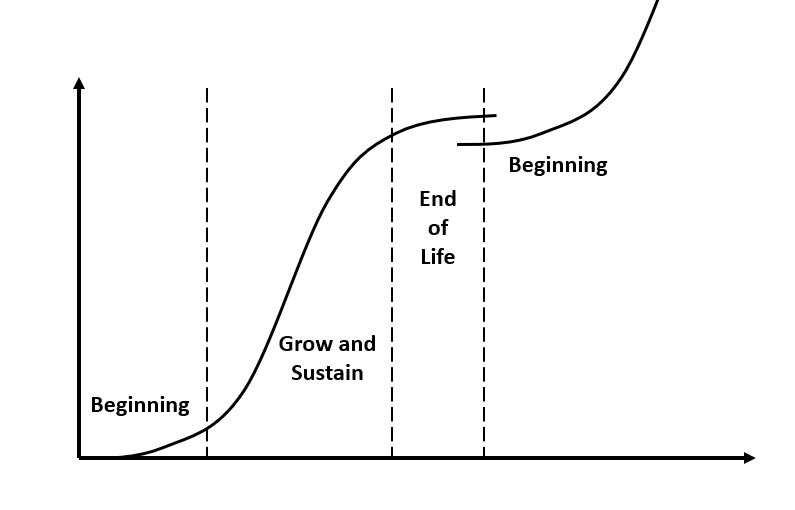
History shows we have been through many such turning points before. In some cases old ways simply ceased to exist, in others – we moved on to something new. This indicates there are three distinct phases: a beginning, followed by a period of growth and sustenance, and then plateauing out or decline / decay. The last phase can sow the seeds for new opportunities and a new beginning.

Interestingly – sages and seers from the east (Indus Valley Civilization) told us about these many centuries ago – whatever has a beginning, will go through three phases. The west refers to it as the “S Curve.”

Three Phases – Beginning, Grow and Sustain, End of Life

Given the current world scenario – many long held truths seem to be under challenge. Here are three of many I am watching (together with an explanation and the evidence in each case):

  • Good quality is an assurance your product will be really liked by customers – logically it makes sense, right? Not quite.
    (Tesla ranked lowest in quality with 200+ problems per 100 cars1, but is well liked. Sales are growing despite the car being rather pricey. It also scored the highest in customer emotional attachment and excitement2 – according to J. D. Power surveys)
  • A pandemic means hardship for everyone; therefore expect a slow housing market, and a recessionary trend in stocks. Again, this is to be expected. Reality shows otherwise.
    (as of July 2020, the COVID-19 situation seems to be getting worse in the USA; yet, we are seeing a strong sellers’ market for houses, and a booming stock market. The Fed and the governments in many parts of the world pledged to do “whatever it takes” to stem / prevent an economic meltdown. A result of printing of money in full force)
  • COVID-19 hastened the demise of some retailers while online retailers accelerated their growth. Not too long ago, consumer retail went through a massive transformation when large chain stores such as Walmart, Target, Sears, Kohls, and the like… replaced small owner-run shops. Now the hunters are becoming the hunted in a classic case of the last phase giving way to new beginnings
    (Amazon’s valuation exceeds the combined total of Walmart, Target, Best Buy, Macy’s, Kohl’s, J. C. Penny, and Sears – according to a 2017 report3)

What do wee conclude? That which was unexpected at one time has become expected now; what was normal has become abnormal, and finally – the meanings of positive and negative have reversed as well. Welcome to a new world!

Sources:

1- https://www.forbes.com/sites/bradtempleton/2020/06/25/jd-power-report-scores-tesla-a-dismal-last-yet-tesla-owners-love-their-cars/#677b8e6ca67b

2 – https://www.cnet.com/roadshow/news/tesla-jd-power-apeal-study-dodge/

3 – https://www.businessinsider.com/amazon-size-insane-facts-about-company-2017-9#amazon-is-more-valuable-than-all-major-brick-and-mortar-retailers-combined-7

Online meetings and coaching in a COVID-19 world

By Rai Chowdhary

In this blog I am sharing what we have found over the last several months as an abrupt transition took place – going from live in person meetings, training / coaching sessions to holding these online. These lessons are a compilation of my first hand experience, and many others who have willingly shared theirs as well.

Be mindful of the technology and its limitations

1 – Many parts of the world are still operating with 3G networks. This means the pace of screen transitions for the audience will lag yours. Therefore – adjust your pace lower as needed. Preferably run a test with a smaller audience beforehand to get a handle on how fast you should move from one page to another

2 – While graphics are great, they can also make a page slow to load; this can easily result in you speaking about a topic that the audience is not even seeing on their screens yet. Manage your page size so it loads quickly (watch the MB of your page / graphic). Find a way to announce unobtrusively what page you are on; this will alert and align the audience

3 – You might not know what device is being used by the audience; many will be using a smart phone. The visual display real estate in that case is limited. If your font sizes are small, they will constantly have to enlarge the view – this becomes a distraction and robs the message / learning

Audience Management

4 – Often you will not be able to see the audience; as such you have no idea of their level of engagement. Asking them to speak up, and participate in various ways is one approach, however, the extreme introverted types may not be comfortable with this. You can use private chat, or ask for responses via text. This could become challenging when groups are large. Regardless – effectiveness of communication will not be the same as being present live face to face.

5 – Specify who needs to speak and when; else – multiple folks will speak up at once.

6 – Periodically announce where you are in the presentation / training; for example you may indicate that we are half way through, and the upcoming points are “….”, and “….”, followed by a 5 minute break

7 – When you have a co-presenter – let the audience know who will be covering that topics and the sequence. This will prepare them ahead of time to expect transitions to different person and voices

8 – Turn off the camera if you want the audience’s full attention on the material being presented. A window showing you speaking could use up precious real estate on the screen, without adding much value. Once they have seen you in the introduction, they get an idea of who you are.

9 – Divide the audience into teams and engage them with suitable assignments if this is amenable to the topic, then let them present their work. This will add variety and spice to the session.

10 – Periodically summarize what was covered, and its relevance. Link it to upcoming material the audience will see.

Continuously Improve

11 – Periodically check with the audience (one check should be early on – within the first ~10 minutes) how is the presentation / training working out. What are key points they are picking up? Let them speak up, or respond by text / chat. This is vital feedback you can use to ensure they have a good experience

12 – Last – but actually one of the first things you must do: In the beginning itself – let them know what to expect. If you have the time / flexibility of accommodating their specific requests, let them know about that as well so they can respond with questions. Invariably – this personal touch is a UX booster!

I am sure you my reader has something you can share as well – please do so. You can leave your inputs in the comment box, or write me at: rai_chowdhary@yahoo.com

Thanks for your time – and please share the link to this blog with others – let’s make living with COVID-19 a better experience for all.

Featured

Five decades later – these lessons from my dad still hold true! Happy Father’s Day

By Rai Chowdhary

Here are five of many lessons I learned from my dad as we drove around in his 1951 Chevy – visiting customers and suppliers in Bombay (now Mumbai), India. They have helped me survive economic earthquakes and tsunamis over the decades. I am sharing the same, and trust you will find them useful too.

undefined

1 – Treat your employees and contractors like family

Many business leaders will say your employees are your biggest asset; yet when business conditions go south, will not hesitate to lay them off.

When you treat employees as “part” of your family – you invest time and coach those who lag behind to help them develop. Guide them and show tough love if and when they misbehave, and lift them up when they are down.

Those employees that are more experienced can become your advisors, if you are humble and teachable. Lessons you can learn from them will save you and your company from the many storms that will rock your boat.

Then there are ones who are kind and nurturing; they will mentor others and “prevent” them from punching holes in the boat.

Rarely, but it will happen that you get a few bad apples. Find the reasons for such deviant behavior, give them a chance to self correct and get help from others in the group. If they will not mend their ways they will be eased out by the rest of the team as it stands united.

2 – Value your suppliers like your partners

Partners are treated as equals, with respect, and as confidants. You can lean on partners during good times and bad. So it is with suppliers.

They will lend a hand when the business faces rough weather and finances are tight. The supply chain will still remain in tact enabling you to tide over the difficult times.

Don’t penny pinch or drive your suppliers to reduce prices unreasonably. Take them into confidence, share with them the challenges you face and leverage their knowledge to overcome challenges, and reduce costs. Coach them if they don’t know how.

Measure their performance and reward them based on performance; but remember – metrics can have a corrupting effect. So use them carefully.

Let them guide you – where feasible – in the design / delivery of your product / service. This will deepen the engagement and create a win win for long time to come.

3 – Reduce the lot / batch size, improve first pass yield, and “prevent” defects early

Since the time of industrial revolution – goods have been produced in larger quantities. While mass manufacturing reduces cost, it can also lead to colossal waste – particularly when batch sizes are large. Smaller batch sizes enable tighter and quicker control. Defects / errors do happen; trap them quickly and as early in the process as possible.

At his factory, he instilled in his staff the importance of checking their own work before it was passed on to the next step. Any defects found were to be investigated right away and the causes fixed before any operations could resume. There were “no” final quality inspectors who acted as a police force; everyone was empowered to build quality into the product, and visual samples of what good looks like vs. what was not acceptable were available at every step in the process.

He also taught me the importance of “first pass yield” and particularly why it needs to be the highest in the steps that are (a) the most expensive, and (b) closer to the end of the line.

4 – Listen to your customer and minimize turnover

Every time I went with him on customer visits, it was a sheer delight to see how we both were welcomed by his customers. This was vastly different from what I saw happening with other suppliers.

On the way back during one such visit, I asked him why this was so. Trust, and relationships – they are two corner stones he said. Without that it is impossible to build a business. Establishing trust takes time, and a lot of active listening and responding in a helpful manner. So one has to keep working at it. Relationships get stronger with time when nurtured, and like an oak tree they can withstand high winds without getting uprooted.

Unlike many of my competitors who keep flipping one customer for another, I prefer keeping customers for life. In the long run, the deep roots matter, and you operate with a lower total cost of business. Getting new customer is not only expensive, but it is hard to tend to too many saplings – so many do not work out and even the promising ones get short changed in the process.

5 – Know your dry well time and the “cash to cash” cycle time

What blood flow is to life, cash flow is to business. Why this fact is lost to many is a puzzle to me. Time and again we have seen businesses folding up because of inadequate cash. Dry well time is simply the duration for which a business can keep doors open at a certain burn rate before the cash balance dries out completely. But this metric by itself is not enough.

One must also know the typical time it takes to go from cash to cash. Let me explain.

It takes cash to prospect, and win customers. This metric looks at the time elapsed from customer contact to receiving a purchase order, and finally to getting paid for the product or service. Few organizations measure this. Those that manage it are rarer. Business leaders should never lose sight of these two metrics.

_______________________________________________

Thanks so much dad for your foresight in teaching me important lessons early in life. Although we lost you in 1967, the memories you left behind are alive and revered. I am now passing these lessons on so others can benefit too.

Right to protest – Yes, Right to arson and looting – No!

By Rai Chowdhary

2020 brought in its wake… a wake-up call for humanity on multiple fronts.

undefined

On the bright side – we just achieved a milestone in space exploration via a flourishing public private partnership. SpaceX became the first private company to send astronauts on a space mission. This touches me deeply and reminds me of the project I worked on to produce materials in micro-gravity conditions in space during the early 1980s. Well done NASA and SpaceX.

Dark and menacing clouds

The shine of this stellar event was over shadowed by several events…

  • Two most powerful nations are on a collision path and it is going beyond just a war of words
  • The pandemic continues to wreak havoc as it sweeps across the world even as attempts to re-open economies are under way
  • Social unrest has been ongoing in many parts of the world (most recently it started in the US), meanwhile
  • Arson and looting of people’s property, shops, small businesses, and more keeps happening. While this allows for a release of anger – it does more harm than good. Small business owners are already hurting and should not have to shoulder “more” economic hardship.
  • On a broader scale, damage to the planet continues unabated via aggressive de-forestation and expanding our food chain to include newer species of wildlife. 

Given this is the case in many parts of the world – I wonder if we can even call our species human, and “smart.” How can we morph the right to protest into a right to harm others and damage property?

Learn before it is too late

The bigger question is how long can such behaviors continue before something even more drastic happens? The rich can hitch a ride into space and probably escape, unlike commoners like you and I.

Can we do better? Perhaps looking at historical events when mass protests happened and world changed forever will help. Remember Mahatma Gandhi, Martin Luther King, and Nelson Mandela? Shall we learn some lessons from them.  Ah – that would happen only if are teachable.  Are we?

Featured

Corona, Conflict, and New Concerns

By Rai Chowdhary

These days there is an eerie feeling across the world amidst uncertainties related to COVID-19 and when it will be under control. Some say it is here to stay for years, and countless millions across the world will be affected by it. That lock downs (or some variant of that) will last forever. Others predict its effects will die out or we will triumph over it, and 2021 will be a boom year for everyone. Yet others believe we should only focus on what can be done in the present and not worry about the future.

Learning from the past and using that to determine actions for today seems like a sensible path forward. But there are challenges to that.

Yet another illusion

What I am going to share with you now might be startling for some, so brace yourself.

Hardly anything is truly what it appears to be. What you are reading at this time – is in reality – a play of electrons on the screen created from the keystrokes I am using, which flow based on my thoughts. The shape of letters, and the words they make, are linked to English language and your comprehension of these is based on the database in our minds.

Further, your eyes actually see the words upside down, but your mental software makes them appear right side up. To those who cannot decipher English, these words are just marks on the screen, or on paper. So – there is more behind whatever you see / hear / learn. Much of that you cannot see.

How does this relate to Corona and what is real?

Well – what is Corona? It is the name of a flu like virus that occurs in nature. What is a virus after all? Is it alive, or just some material? The debate on the latter goes on…

Viruses are the most abundant biological entity and are found in just about every ecosystem on the planet. They are made of molecules of nucleic acids (RNA, DNA) encapsulated in a protein coat. In simple terms – RNA helps carry out the DNA’s blueprint guidelines, and there are multiple types of RNA. Digging further will take us into their structure (DNA is a double helix, where as RNA is a single helix), and elemental composition, etc….

Influenza virus – computer generated image Source: CDC

Your senses cannot “see” or “detect” a virus. To see it, you need a powerful microscope. Under that, viruses appear as particles of different shapes and sizes with spikes as you see in the image above. You cannot smell or hear them, but only “feel” the effects of the battle that ensues between your immune system and the virus.

For those with relatively weaker immune systems – the effects are severe. Moreover, high viral loads can be hard to deal with even if you are healthy. Not everyone is affected in the same way, i.e. the reality of the effect of exposure is relative.

This means it is natural to have differences between one person’s reality vs. another’s. Therefore, treating the whole population with one kind of approach makes little sense; the bigger question is whether doing so sows the seeds of conflict. The implications are far reaching and not insignificant.

Conflict – is it natural?

Look around in nature – every species acts to self preserve, grow, and multiply – starting from the simple single cell amoeba all the way to humans. This also holds for members within a given species. It is natural for a virus to do the same. However, a virus needs a host – and that can be a human or another species. Conflict starts when one species does the above actions at the expense of another – by design or by chance.

Blaming the virus for “attacking” us is misplaced; it is doing what it is meant to do. Prior to making humans as its host, Corona lived comfortably within certain animal species; we decided to add them to our lives, in some cases to the food chain. Now Corona and we humans will have to co-exist; that is the new reality.

A new concern now is if we as the human species can handle the situation without tearing each other apart using deceit, concealment of truth, and engaging in blame game. Personally, at this time I am cautiously sanguine about the ability of humans to stay united and get along with each other peacefully. However the path ahead will require us to build trust, openness, treat each other with respect and fairness. It can be done…don’t you think so?

Rai Chowdhary

Further reading:

Most abundant species on earth

How much bacteria does the human body carry?

Featured

Three Key Lessons from COVID-19 / Corona

By Rai Chowdhary

Shortly after the market crash of 2008 crash, the CEO of a Fortune 500 leader in chemicals and plastics used to tell us “Never let a crisis go waste.” While I don’t know who said this originally, it resonated with me then, and I am reminded of those words today again.

Not the first time

We have lived through a variety of crises before, and these are bound to happen again. What is surprising is that each time it occurs, we realize we were unprepared. Some may say hindsight is 20/20, but really – think about it. Was it so difficult to foresee that pathogens could easily move across species – particularly when there is close contact?

What did we learn, and will it stick?

As we look forward to a post Corona world, three things definitely stand out, and each of them can teach us valuable lessons:

1 – Weapons could not protect us. The weapon systems we have piled up across the world, including nukes that can wipe out humanity on the planet many times over were of no help

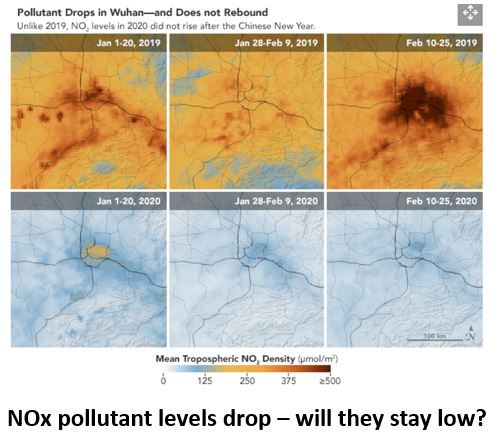
2 – The planet can heal itself given a chance. Nature started to recover from the excesses we have committed – pollution cleared up (see images of Wuhan below), wild life got a chance to move freely, and many learned the value of staying close to family

undefined

Source: https://www.livescience.com/coronavirus-changes-pollution-over-china.html

3 – Our ability to understand and manage risks is still in its infancy, not only that – almost all of us are particularly prone to herd mentality driven by an amygdala hijack – regardless of education and profession. Rational thought and analysis seemed to vanish in the wake of the dread from Corona.

Now comes the bigger question. Are we teachable? Why do I ask this question? Our history is littered with making the same or similar mistakes repeatedly. Pandemics have happened before, viruses have jumped species, and frauds have been repeatedly committed as well. In this context – what else is happening now – one may ask. China is still building coal-fired power plants. The links below provide further details for those interested. All I can say is…

Do we need a stronger wake-up call from nature?

History of pandemics

China building coal-fired power plants even now

Featured

COVID-19…Peeling the Corona Onion

By Rai Chowdhary

CoronaOnion

Last update: May 11, 2020

The nonstop drumbeat about numbers and how people’s lives are getting affected is deafening to say the least. The whole environment is full with discussion points, and an endless parade of commentators who bring on guests and push one angle or another.

How is one to peel the onion, and make sense out of so much noise and chaos?

Well it begins with good questions; those that enable us get the right answers. Unfortunately, there is paucity of this when it comes to much of media, and the leaders of several countries.

The key to gaining accurate knowledge is asking the right questions, then probing the answers…

Here are ten key questions I would be asking (picked from a longer list)…

  1. Of the population in each area, how many were tested and the basis for selecting these folks for testing?
  2. What % were exposed to the corona virus?
    (These may lead you to think we need to test the whole population – which will be very hard to do. However, a statistically sound estimate can be arrived at using a good sampling approach)
  3. Testing methods and their error rate (both – false positives and false negatives – see link below)
  4. What does each testing method tell us – that the person was exposed? That they were exposed and recovered? Something else?
  5. Of those exposed – how many (%) develop symptoms, and what is their personal and work lifestyle like? Are they a health services worker? Smoker?
  6. What are the age groups, and the existing conditions for those who exhibit symptoms?
  7. Of those who show symptoms – how many (%) require hospitalization, and how does that compare with hospitalization rates for other diseases we know of?
  8. What % of those who are hospitalized recovered and what % did not? How does that compare with other types of flu?
  9. Of those who supposedly succumbed to the virus, how many were really examined to establish that as the primary cause of death vs. the contributing condition (see link below for more information on inconsistencies in determining the cause of death)
  10. Comparison of the types of antibodies found in those that survived vs. those that succumbed

I present these to help you expand your critical thinking and realize that we need to examine data carefully rather than accepting it at face value. You may have another perspective and questions you would like to ask – feel free to share these to enrich our collective knowledge.

Data with high integrity and fidelity can represent the truth; however multiple true statements can be created from such data. A simple example is a glass is half full; well – it is half empty at the same time.

Testing methods and their error rates

Inconsistencies in determining cause of death

And lest we forget – following the herd does not mean herd immunity, and that all models are wrong – some more than others. 

May truth prevail.

Rai Chowdhary

COVID-19 Perspectives

By Rai Chowdhary

The scare of harm from COVID-19 has the world nearly paralyzed. So many numbers are thrown around and opinions voiced – it is deafening.   I am offering a few pointers we need to take into account as we try to digest all the information and separate signals amidst all this noise.

  • Since testing the whole population is very hard to do, and could be infeasible – it is not known how many carry this virus
  • Of those carrying this virus – how many have symptoms, and how many of these get detected
  • From the ones that exhibit symptoms – how many are able to fight off, vs. get sick, and how many get seriously sick to the point of needing medical intervention
  • Of the ones who get seriously sick, how many recover vs. how many succumb
  • For those that succumb – was it COVID-19 or there other factors that were present and were the real cause? COVID-19 just happened to be there.

Many factors determine who will be affected and to what extent
(a) the viral load
(b) the immune system of the individual
(c) latency between exposure and development of illness / symptoms
(d) kinetics of illness progression vs that of immunity development
(e) …more

What is the truth behind the explosion of fear based on this virus? I wish it was that easy to fish out. My thinking it it will be years before we will know it – if at all.

Meanwhile – here are a few websites and videos that I found informative:

Shekhar gupta – an enlightening talk on COVID-19

US Army Engineers fighting COVID-19

Corona virus warnings came up early in 2019 – no one listened

India eradicated small pox and polio – they know how to deal with epidemics

Ten mis-conceptions about Corona virus COVID-19

Brain images may show cytokine storm from COVID-19

How believable are the mortality numbers – and what are we doing to ourselves – Dr. Jay Bhattacharya of Stanford